







How to Detox From Chlorine Safely at Home

Quick Summary
To detox from chlorine after swimming, rinse your skin and hair with lukewarm water within minutes of leaving the pool, before drying off. Follow with a gentle, fragrance-free wash, then change out of wet swimwear. Chlorine mostly sits on the surface, so these physical steps matter more than supplements.
- Rinse with lukewarm water within minutes of leaving the pool, before drying off.
- Rinse for 1 to 2 minutes; long, hot showers strip natural oils.
- Change out of wet swimwear within 15 minutes.
- Vitamin C and taurine are not supported as chlorine detox agents in humans.
- See a doctor for trouble breathing, wheezing, or burning eyes or skin.
Table of Contents
- How Chlorine Gets Into Your Body After Swimming
- Step 1: Rinse Off Within Minutes of Leaving the Pool
- Step 2: Wash Skin and Hair With a Chlorine Removal Body Wash
- Step 3: Change Out of Wet Swimwear and Stay Hydrated
- Does Vitamin C or Taurine Actually Cancel Out Chlorine?
- How Long Chlorine Stays in Your System and When to See a Doctor
- Your Simple Post-Swim Routine for Next Time
- Frequently Asked Questions
How Chlorine Gets Into Your Body After Swimming
Last Updated: November 17, 2026
Chlorine is the chemical that keeps swimming pools safe from bacteria, and it also clings to your skin and hair when you climb out. Most people wonder whether that residue matters and how to get rid of it. At Nourishing World, we focus on clear, practical steps you can take at home.
Here is the honest starting point. Chlorine exposure from swimming is usually a surface issue. It sits on skin and hair, and it can dry them out or irritate sensitive areas.
The main routes of contact are simple:
- Skin contact: Chlorinated water sits on the surface of your skin as you swim and dry off.
- Hair contact: Strands soak up chlorine and can feel rough or look dull.
- Breathing: Chlorine smell near indoor pools comes from chemical compounds in the air, not just the water.
A review in StatPearls from the National Center for Biotechnology Information explains that dangerous chlorine exposure usually involves inhaling chlorine gas in a concentrated, contaminated space. Routine swimming is a different situation, and the medical guidance for gas exposure does not apply to a normal pool visit. StatPearls chlorine gas exposure review
A separate review in PubMed Central discusses health effects linked to training in chlorinated pools, including respiratory and skin concerns for frequent swimmers. review on health effects from swimming training in chlorinated pools
Quick answer: Chlorine from pool water mostly sits on your skin and hair. Rinsing soon after you swim helps remove it.
Step 1: Rinse Off Within Minutes of Leaving the Pool
The fastest way to reduce chlorine on your body is to rinse with fresh water as soon as you get out. Waiting even 30 minutes lets more of the chemical dry onto skin and hair.
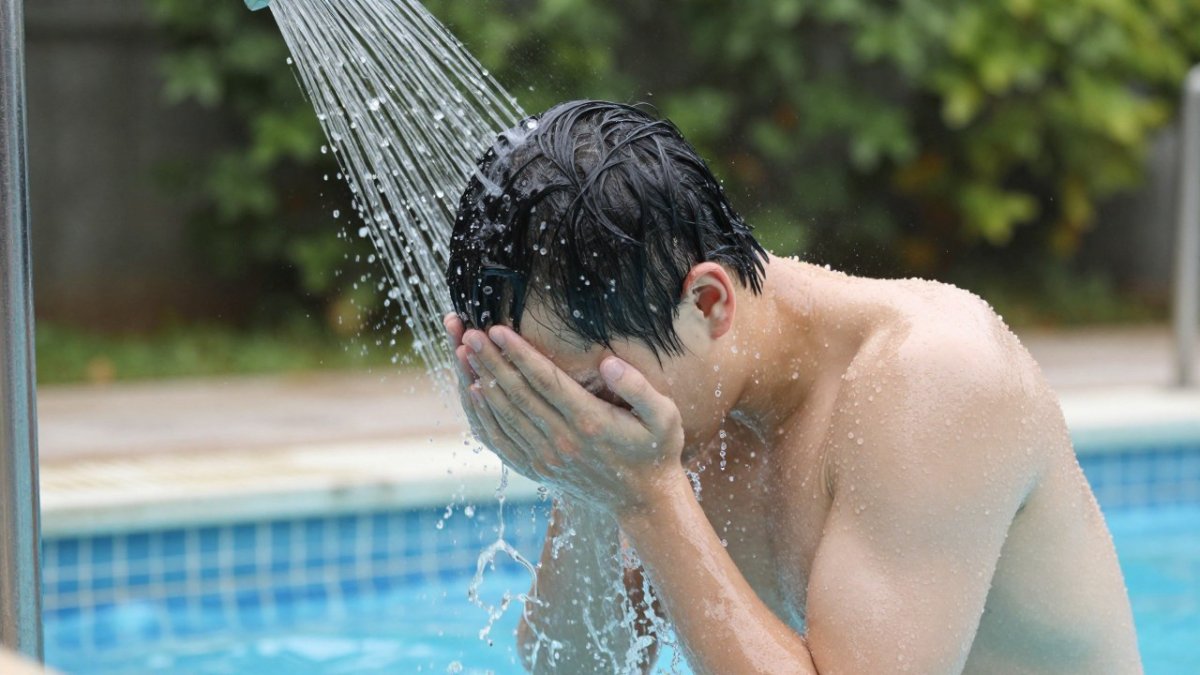
A common mistake is drying off with a towel before rinsing. Towels can spread chlorine around rather than remove it. Rinse first, then dry.
- Use lukewarm water, not very hot. Hot water can dry skin more.
- Rinse your face, hair, and the folds of your body, such as under the arms and behind the knees.
- Keep the rinse to 1 to 2 minutes. Long, hot showers strip natural oils.
Step 2: Wash Skin and Hair With a Chlorine Removal Body Wash
After rinsing, a gentle wash helps lift leftover residue. Look for a body wash or shampoo with mild cleansers and no heavy fragrance. Apply it, let it sit briefly, then rinse fully.
If you want a longer-term fix at home, a shower filter reduces the chlorine in the water you rinse with. The 2 Rivers 15 Stage Shower Filter System is one option. Its listing describes multi-stage filtration aimed at chlorine and sediment, and its replacement cartridges are sold separately. For a wider look at what filters remove, see how filters remove chlorine from water and whether tap water could be causing dry skin.
Many people also check whether their tap water is the cause. Our Universal Shower Filter System is designed to help reduce chlorine, and its listing notes gentler water can help with dryness.
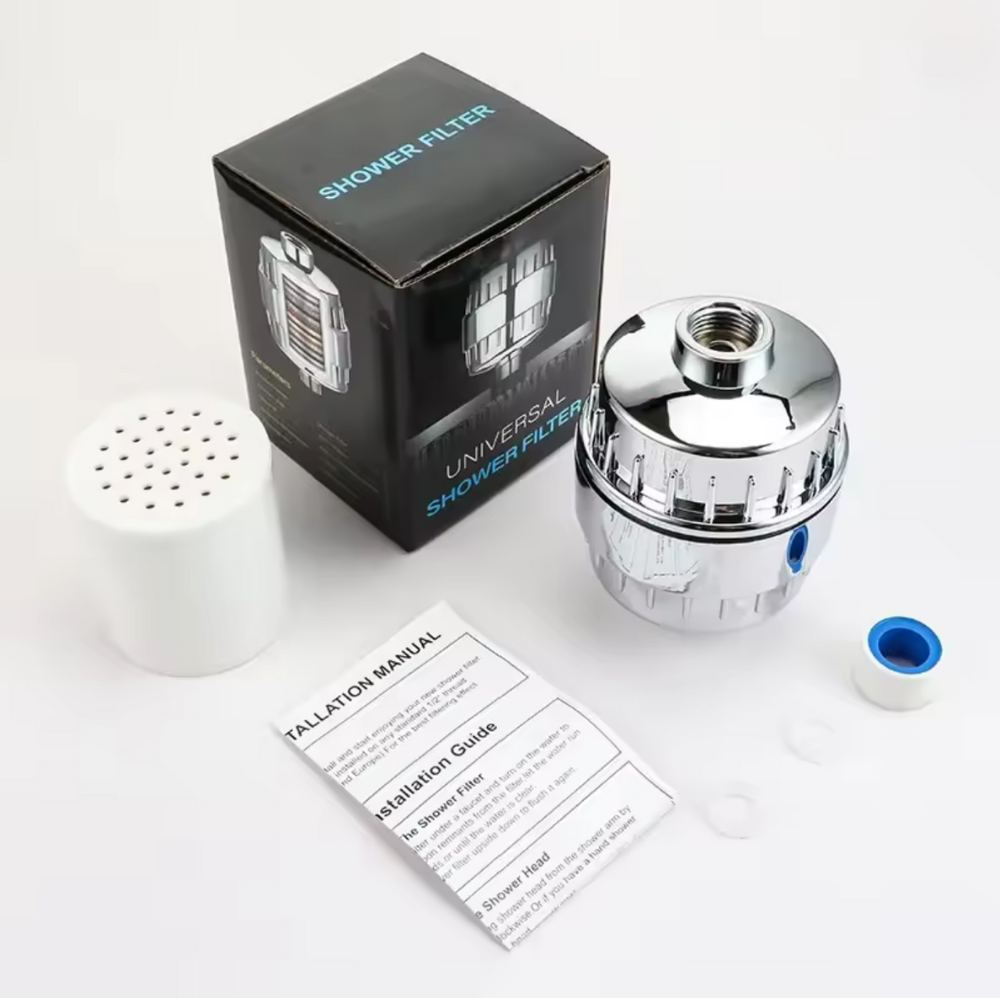
The table below summarises the shower filter options mentioned in this step, using only the details the article gives.
| Option | Best for | Key difference |
|---|---|---|
| 2 Rivers 15 Stage Shower Filter System | Reducing chlorine and sediment in shower water | Multi-stage filtration; replacement cartridges sold separately |
| Universal Shower Filter System | Reducing chlorine for drier skin | Listing notes gentler water can help with dryness |
Step 3: Change Out of Wet Swimwear and Stay Hydrated
Wet swimwear holds chlorinated water against your skin for longer. Change into dry clothes as soon as you can. This is especially important for children and anyone with sensitive skin or eczema.
Drink water after swimming. Hydration supports skin comfort. Water is enough.
- Change out of wet swimsuits within 15 minutes.
- Rinse swimsuits in cool water after each use.
- Drink a glass of water shortly after leaving the pool.
Does Vitamin C or Taurine Actually Cancel Out Chlorine?
Many online guides claim that vitamin C or taurine can neutralize chlorine inside the body after a swim. These claims are not supported by reliable human evidence.
Vitamin C (ascorbic acid) does react with chlorine in water. There is no credible human evidence that taking vitamin C pills after swimming removes chlorine from your body or prevents chlorine-related health effects.
Taurine is an amino acid the body produces naturally and obtains from food, especially animal products. It supports heart, muscle, and nervous system function. Some websites claim taurine "binds" chlorine or protects against chlorine byproducts, but these claims are not supported by solid human studies. A common pattern in the supplement industry is to take a plausible-sounding mechanism from test-tube research and extrapolate it to a human benefit that has never been demonstrated. Taurine is not a chlorine detox agent.
What about other supplements? Some guides recommend N-acetylcysteine (NAC), glutathione, or chlorella for chlorine detox. None of these has strong human evidence for removing chlorine after swimming.
The practical takeaway: If you want to take vitamin C or taurine for other reasons, follow the label and check with a doctor first, especially if you take medications or have health conditions. Do not take high doses in the hope of flushing chlorine out of your system. For a side-by-side look at express water filters vs home alternatives, you can compare filtration options beyond supplements. Extra doses are not a substitute for rinsing and washing.
Watch out: Do not rely on supplements instead of rinsing and washing. The steps that actually remove chlorine from your body are physical: rinse, wash, and change out of wet swimwear. Supplements are not a substitute for those habits.
For a broader look at how chlorine behaves in water and on skin, see our guide to how filters remove chlorine from water.
How Long Chlorine Stays in Your System and When to See a Doctor
Rinsing and washing are the practical steps for removing chlorine from your skin and hair.
See a doctor if you notice any of these after swimming:
- Trouble breathing, wheezing, or a tight chest
- Coughing that does not stop
- Burning eyes or skin that blisters or swells
- Symptoms that get worse over several days
If you have concerns about frequent pool use, talk to a doctor.
Your Simple Post-Swim Routine for Next Time
A consistent post-swim routine does more to protect your skin and hair than any single product. The sequence below is practical and adaptable to different settings.
1. Rinse immediately (within 5-10 minutes). As soon as you leave the pool, get into a shower and rinse your whole body with lukewarm water. Do not use hot water, it strips natural oils and can worsen dryness. Focus on your hair, face, underarms, groin, and any skin folds. A brief rinse helps remove surface chlorine. If you cannot shower immediately, at least rinse your face and hair with fresh water from a bottle or fountain, and change out of wet swimwear. Rinsing promptly also helps protect extensions from lingering pool water, and QUEEN OF GOOD HAIR can help you take that care a step further.
2. Wash with a gentle cleanser. After rinsing, apply a mild, fragrance-free body wash or a shampoo labeled for chlorine removal. Let it sit for about 30 seconds, then rinse thoroughly. Avoid harsh soaps, loofahs, and hot water. If you have sensitive skin, look for a cleanser labeled "gentle" or "fragrance-free."
3. Change out of wet swimwear right away. Wet swimwear holds chlorinated water against your skin and can cause irritation or chafing. Change into dry clothes within 15 minutes if possible. Rinse your swimsuit in cool water after each use and hang it to dry.
4. Moisturize while skin is still damp. Pat your skin dry with a clean towel (do not rub vigorously) and apply a gentle moisturizer within a few minutes while your skin is still slightly damp. A gentle moisturizer can help keep skin comfortable.
5. Drink water. Swimming is exercise, and pool water can be dehydrating to skin. Drink a glass of water after your swim. You do not need sports drinks or special hydration products unless you have been swimming intensely for a long time.
If you do not have access to a bath or specialty products: A plain lukewarm shower with a mild soap is enough. If you have no shower access, rinse with bottled water and change clothes as soon as possible.
If you prefer a bath: A warm (not hot) bath is gentler on skin than very hot water. Avoid long soaks, which can dry your skin. If you have sensitive skin, test any bath additive on a small area first.
Watch out: Do not scrub your skin hard or use hot water to "open pores", this can increase irritation and remove protective oils. Also, do not use essential oils directly on skin without diluting them, as they can cause allergic reactions.
A note on saunas: If you enjoy a sauna after swimming, drink extra water and keep sessions short.
When to see a doctor: If you notice persistent coughing, wheezing, chest tightness, or skin that blisters or swells after swimming, seek medical attention. People with asthma, pregnant women, and parents of young children should talk to a doctor about any concerns regarding frequent pool use.
For more on reducing chlorine exposure before you swim, see our guide to whether tap water could be causing dry skin and consider a shower filter if you are concerned about chlorine in your home water.
Chlorine exposure is easy to manage when you rinse fast, wash gently, and keep your skin moisturized. Nourishing World stocks shower filters and replacement cartridges for homes that want less chlorine in every rinse, so you can start your next routine with cleaner water.
Frequently Asked Questions
How long does it take for chlorine to get out of your system?
For ordinary pool or tap-water contact, rinsing and washing are the practical steps for removing chlorine from your skin and hair. There is no verified timeline in the research for a general detox, so the practical answer is to rinse promptly after swimming and watch for symptoms. If you have persistent skin irritation, breathing difficulty or other concerning symptoms, speak to a doctor rather than waiting it out.
Does vitamin C cancel out chlorine?
Vitamin C is sometimes promoted as a way to neutralize chlorine, but the research available here does not establish that taking it after swimming removes chlorine from your body. Chlorine exposure from pools and tap water is generally handled by rinsing and washing, which removes it from the skin and hair. Vitamin C is not a substitute for those steps, and claims about internal detox should be treated with caution.
Can a chlorine-removal body wash help after swimming?
A gentle body wash can help take residue off your skin and hair after swimming. Use it in addition to a thorough rinse, not as a replacement for leaving the pool promptly and changing out of wet swimwear. If your skin stays dry or irritated, moisturize afterwards and see a doctor if the problem persists.
What are the symptoms of having too much chlorine in your body?
Symptoms such as coughing, wheezing, chest tightness or trouble breathing need medical attention. For routine pool contact, the simplest protection is rinsing off promptly and keeping your skin moisturized.
